
What is Spiritual Health Awareness Week
Spiritual Health Awareness Week (SHAW) is a national initiative dedicated to raising awareness about the importance of spiritual health as part of whole-person health. It invites Canadians to explore the meaning, purpose, hope, connection, and belonging that support wellbeing and help people navigate life’s challenges. Through education, reflection, conversation, and community engagement, SHAW encourages greater understanding of the role spiritual health plays in healthy individuals, workplaces, and communities.
Spiritual Health Matters
This year’s theme, Spiritual Health Matters, shines a spotlight on an often-overlooked part of our wellbeing. Spiritual health is about the meaning, hope, purpose, connection, and belonging that help us navigate life’s challenges and flourish every day.
Whether you’re hosting an event, wearing blue, creating a reflection wall, sharing stories, or simply asking someone, “How’s your spirit?”, every conversation helps raise awareness and strengthen our communities. Join thousands of Canadians in making spiritual health visible where you live, work, learn, and care.
Together, let’s show Canada that Spiritual Health Matters.
Please join us for a free brief webinar on how best to use the 2026 SHAW toolkit for maximum effect. It will be held on Thurs, Sept 3, 2026 12 noon eastern. Click here to register.

2026 Theme: Spiritual Health Matters
2026 TOOL KIT
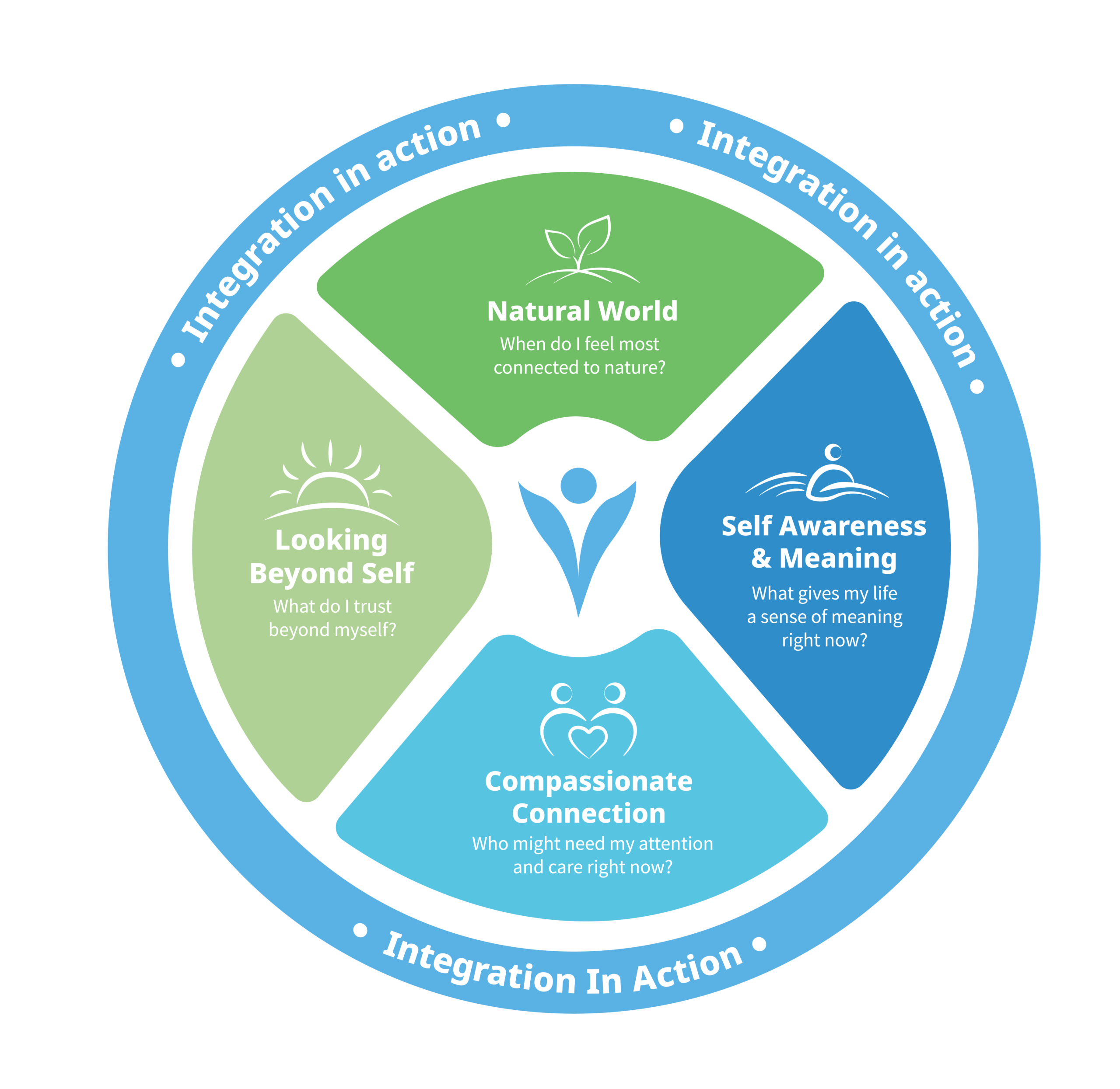
Trousse d'outils en français
Domaines de la santé spirituelle
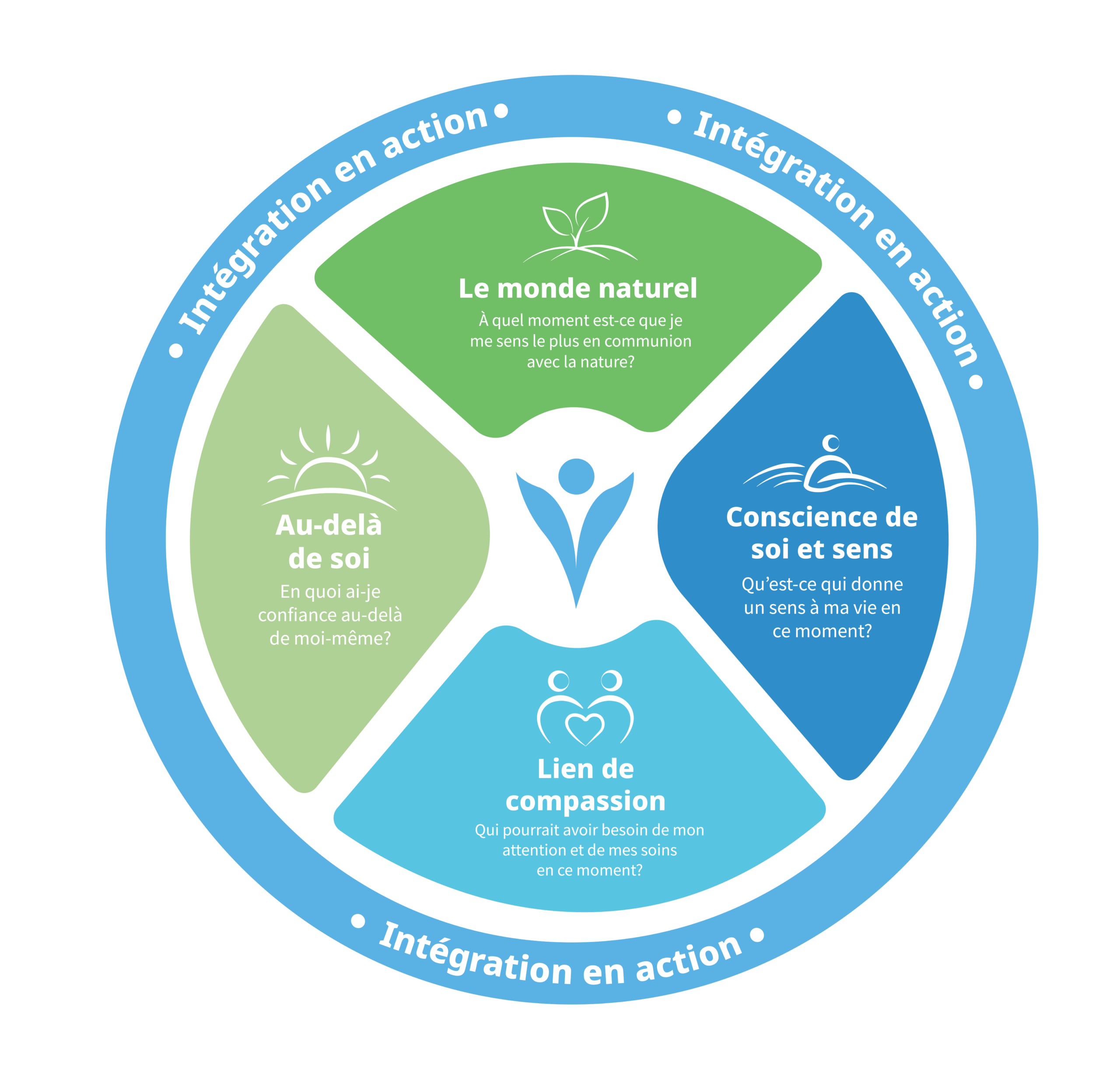
2025 Tool Kit
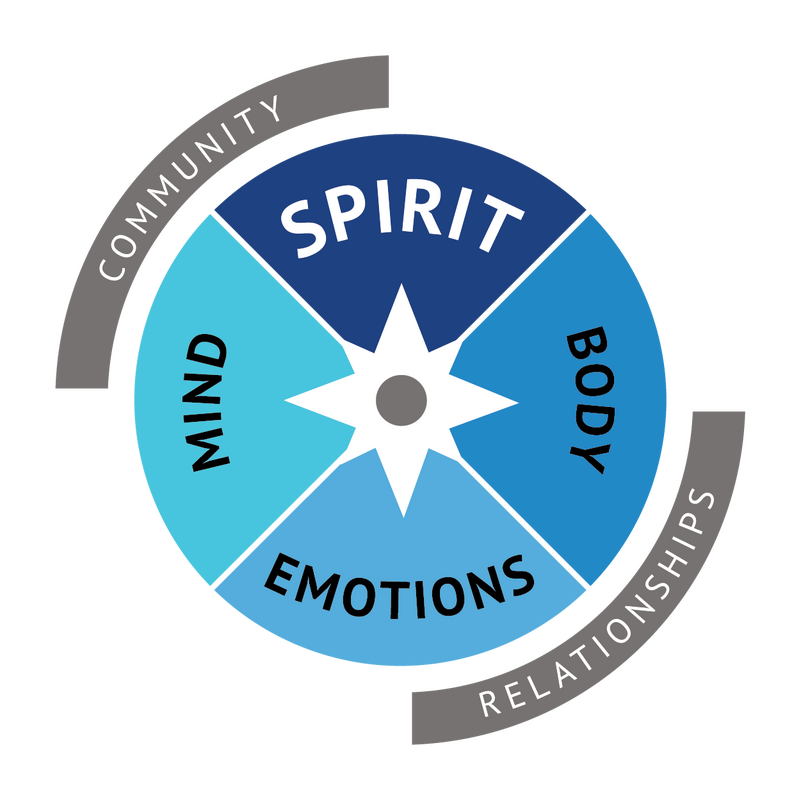
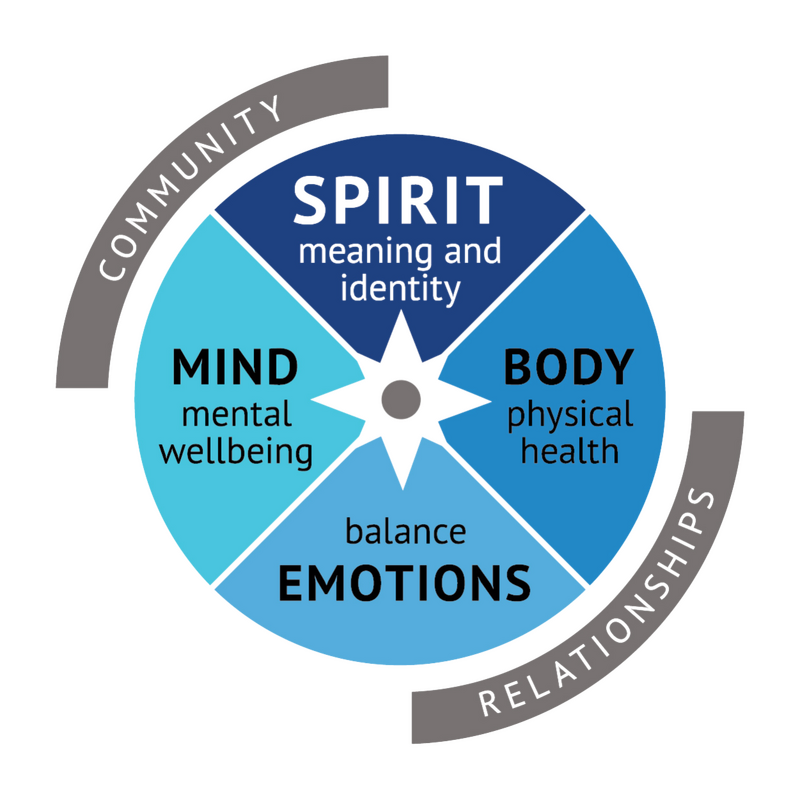
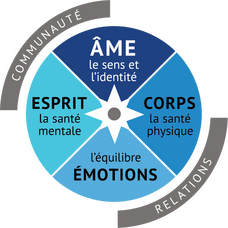
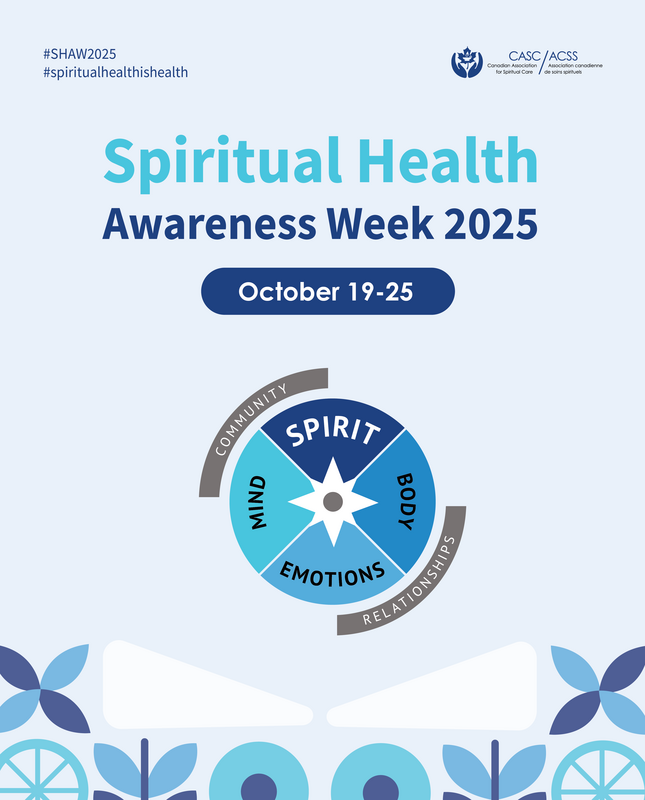
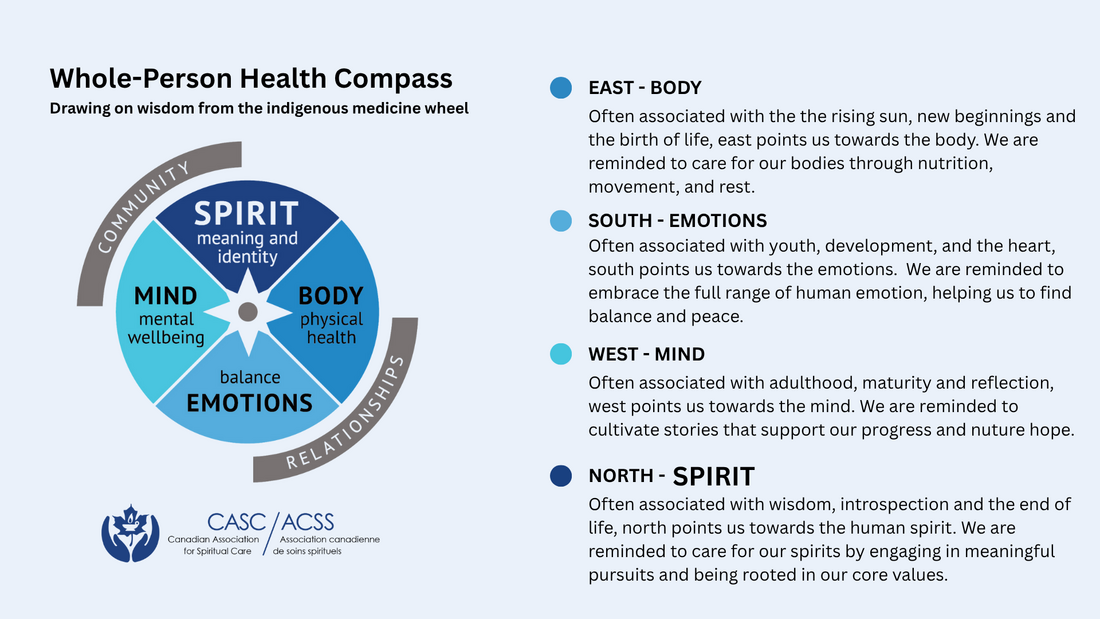
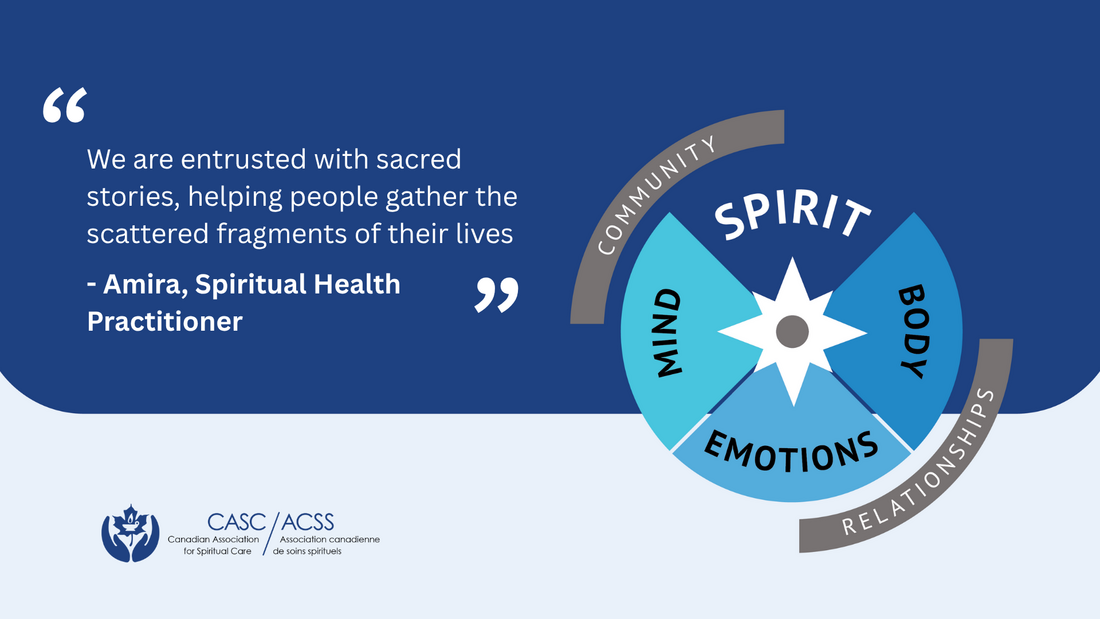
We encourage you to utilize the whole personal compass in your emails, social media posts, websites and other communication channels. Please ensure you credit CASC/ACSS when using the compass graphic by including the following: “Graphic created by CASC/ACSS | spiritualcare.ca”
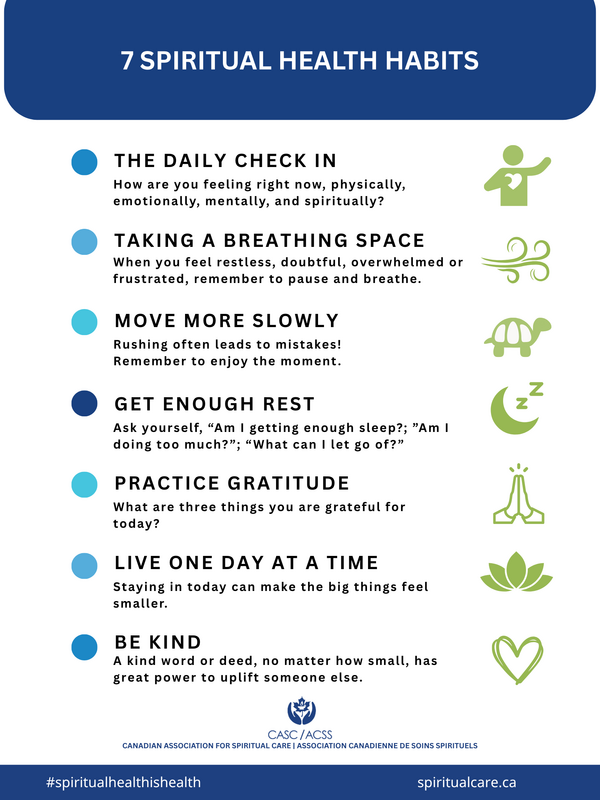
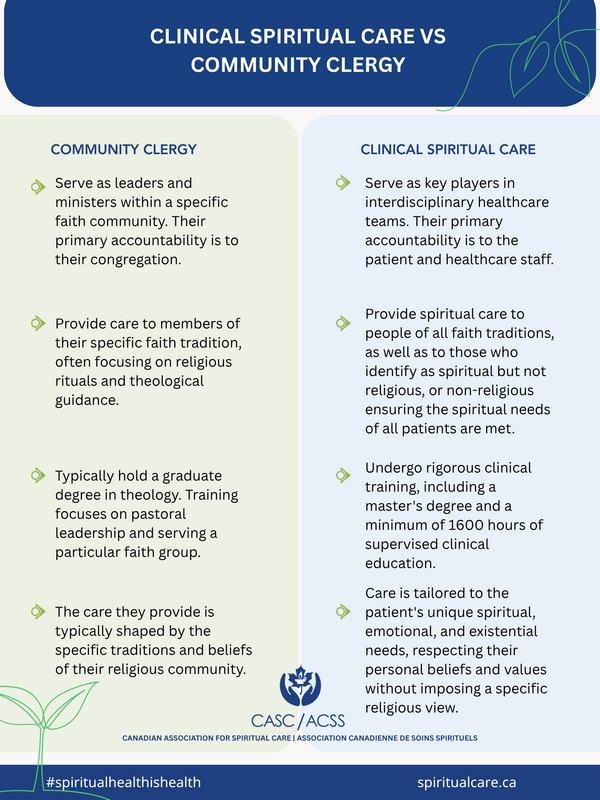
Posters
Social media content
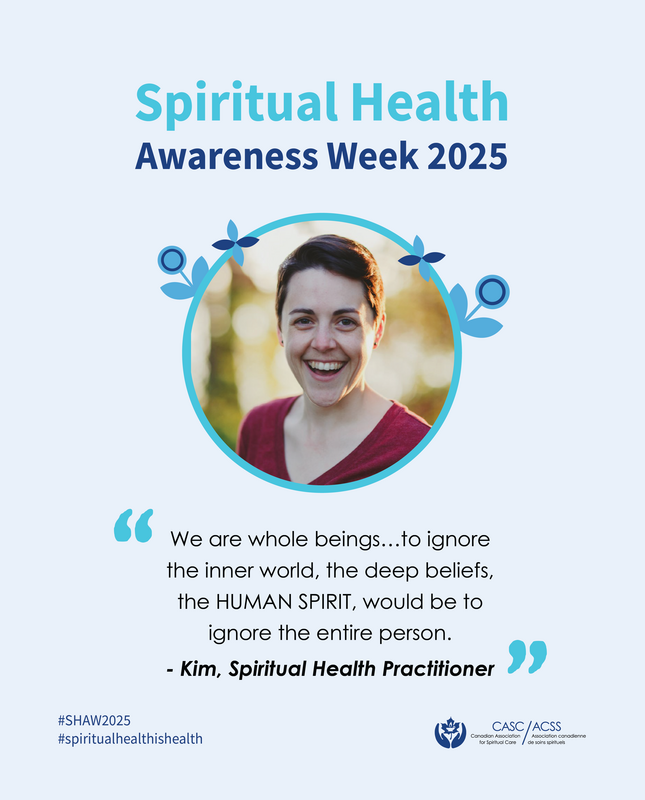
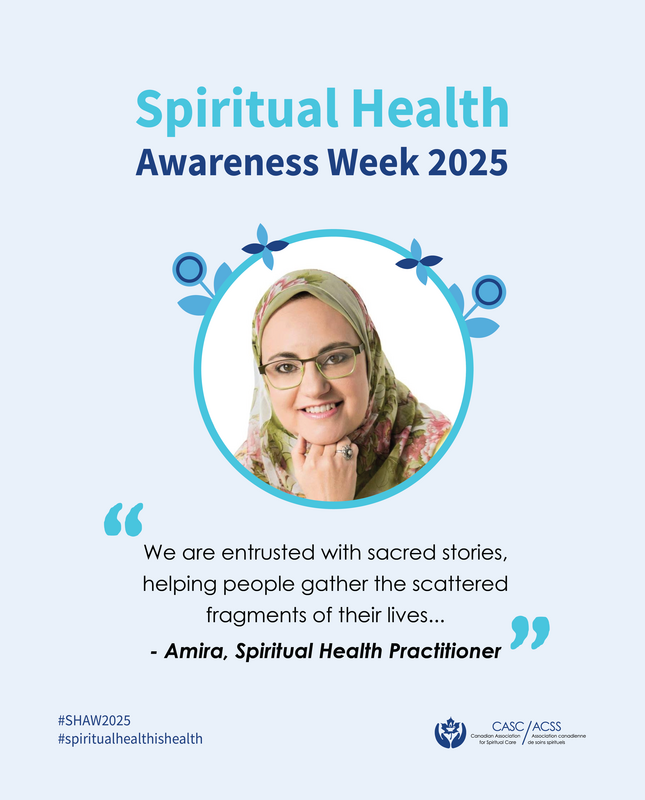
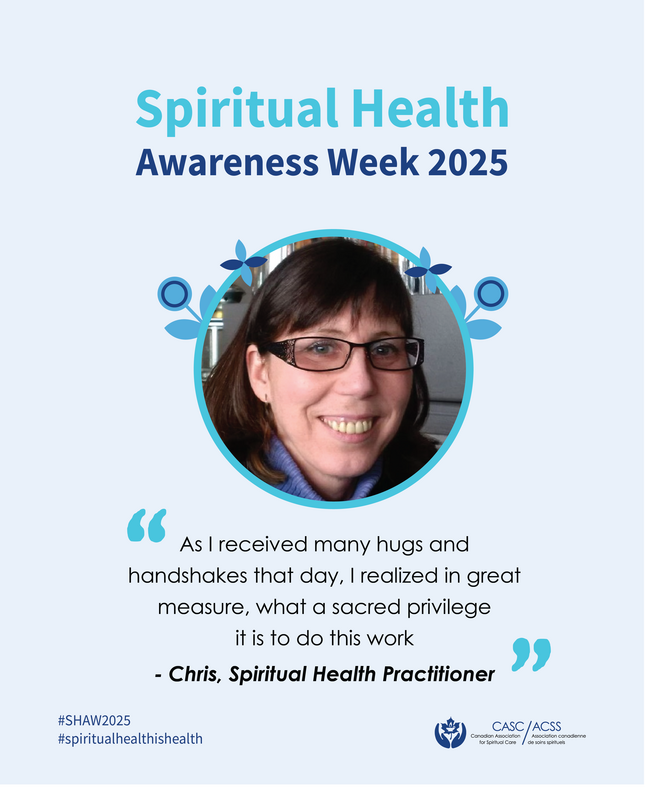
Powerpoint Slides
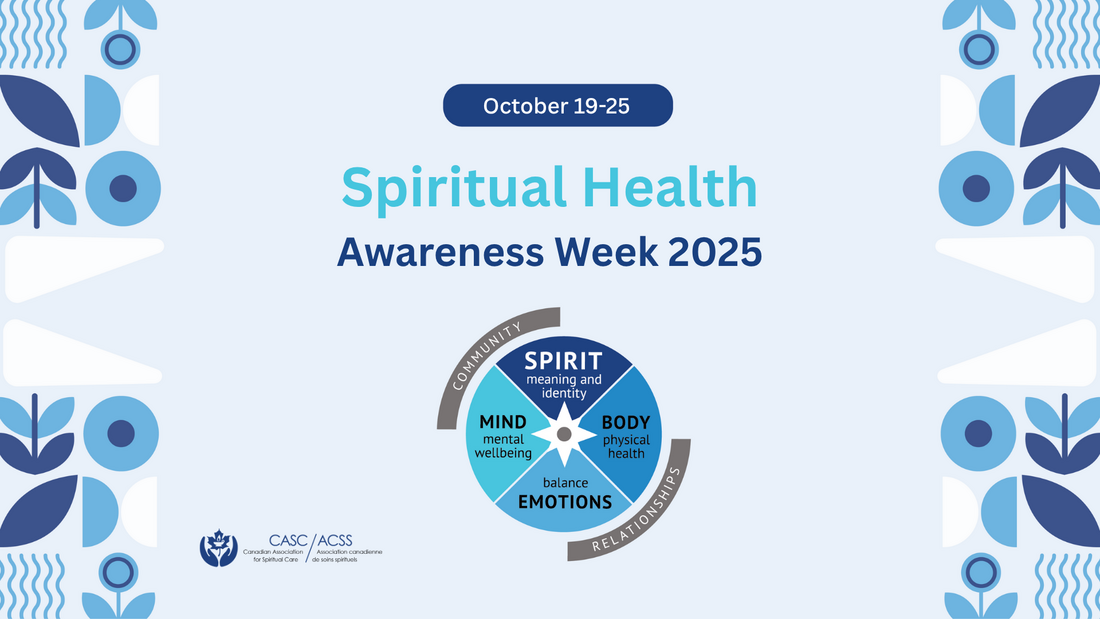
CASC/ACSS Stories of Impact

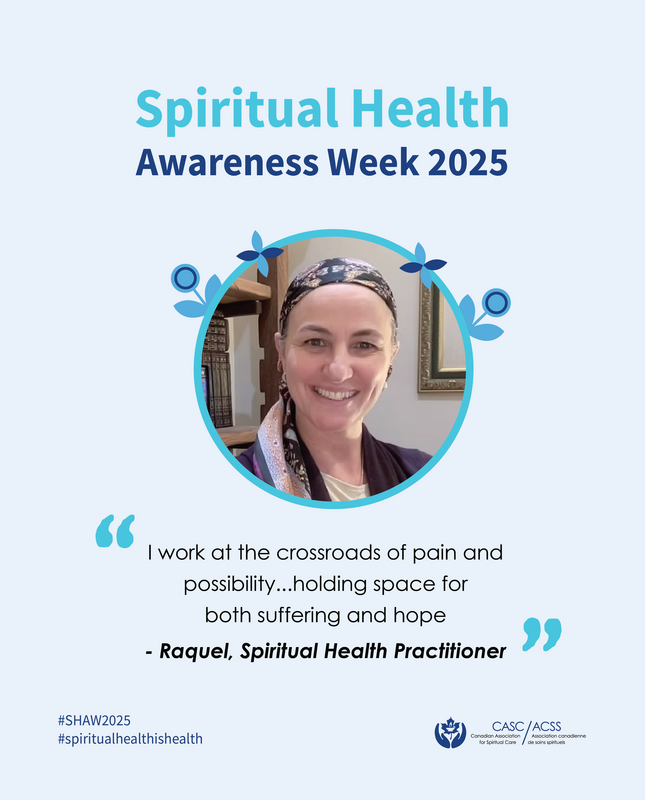
Raquel
Certified Member (Qualifying)
Read Story
What makes supporting the human spirit more than just a job?
What makes this work meaningful is not only the presence I offer others, but the transformation it stirs within me. I enter rooms where time slows down, where words become unnecessary, and where tears, touch, silence, or prayer open up space for healing that is beyond what any treatment plan can offer. Supporting the human spirit isn’t about fixing or solving, it’s about witnessing. It’s about holding space for mystery, for resilience, and for the flicker of light that still lives within even in life’s darkest valleys.
This is a path I chose not because it is easy, but because it is holy. It is how I live my faith, not in dogma, but in devotion to the sacredness of every person I meet.
Share an example of when spiritual care made a meaningful impact
As I recited, “And you shall love the Lord your God with all your heart, with all your soul, and with all your might,” I gently reflected aloud that even in illness, even in silence, her soul was still capable of that love. That love is not measured by what we can do, it’s measured by the purity of our being.
A tear formed in the corner of her eye. She squeezed the stone.
Later, her daughter told me it was the first time in weeks she saw a trace of peace on her mother’s face.
Supporting the human spirit means remembering that even when someone can no longer speak, walk, or respond, their soul is listening. And love, especially the love between a soul and the Divine, never fades.
Why is spiritual health important?
I believe spiritual care is an act of justice. It restores dignity. It says: you matter not because of what you do, but because of who you are. And in a world where people are often reduced to charts, numbers, or beds, this kind of care is radical, necessary, and profoundly human.
Jewish tradition teaches that to save one life is to save an entire world. I would add: to touch one soul, to witness one person’s truth, to bless one moment of connection is also to redeem a world. One sacred encounter at a time.
Doug
Certified Member
Read Story
Share an example of when spiritual care made a meaningful impact
“Jane” was supine and unconscious when I met her. Out of prison for only two days after a term in a federal penitentiary, she’d been rushed to the ICU that saved her life. Once on the ward she requested spiritual care to talk about her time in a coma.
“I now truly believe,” she began.
“And what is it you truly believe?”
“That there is life after death,” she declared, elaborating how this could be either or good or bad depending “on the kind of life you live.”
We let the words sink in. Her resumé spoke volumes—addictions, lawlessness, neglected children and God knows what all else. We sat with the heaviness and she allowed herself to steep in the accumulated sorrows without trying to justify or explain. She acknowledged harsh facts.
At the next visit she called herself “lucky,” fortunate “because I nearly died and I didn’t.” Her desire to live a healthy lifestyle was evident; her fear that it could all collapse into disaster but a heartbeat away.
A few days later she was stronger and making plans. Her boyfriend was repairing the home they intended to share in a place far removed from the temptations of the city. At one point the talk turned to Harry Potter, and when she faltered in the details of scene, a voice from behind the curtain chimed in with helpful comment.
As I left I greeted the neighbour, who said he’d listened to several of my conversations with Jane.
“She’s always happier after you’ve been here,” he added, and turned back to his cards with no idea of the blessing his words conferred on me.
Ema
Certified Member (Qualifying)
Read Story
What makes supporting the human spirit more than just a job?
Supporting the human spirit is not just what I do; it is who I am. My path as a spiritual care practitioner is deeply shaped by my identity as a Muslim. In the Qur’an, we are reminded that every soul is sacred: “Whoever saves a soul, it is as if they had saved all of humanity” (Surah Al-Ma’idah 5:32). This verse lives in me as both a responsibility and an invitation. To support even one soul through hardship is to participate in a greater collective healing.
It is a sacred act of service, khidma, which not only benefits the one being served but also nourishes the heart of the one who serves. The soul is fragile. It carries wounds, memories, and questions that often remain unseen. To care for the human spirit is to offer presence in these unseen spaces—to sit with people in their sorrow, confusion, or longing—and to remind them, simply through being there, that they are not alone.
For me, this work is both a professional path and a spiritual calling. It allows me to embody my faith by walking alongside others with compassion, humility, and deep respect.
Share an example of when spiritual care made a meaningful impact
One of the most powerful experiences I have had in this work was during a session of the Hope Group I facilitate at the Pinewood Addiction Centre. This is a processing group where people are invited to connect through their stories and to find strength and meaning through shared vulnerability.
During one session where we were discussing what is sacred to us, a young man opened up about his relationship with his mother. He spoke with deep emotion about his regrets, especially the pain he had caused her, and shared his profound love for her. He expressed a desire to change his life and become the kind of son she could be proud of.
As he spoke, a mother in the group quietly began to weep. After a long pause, she shared her own longing to be that kind of mother for her children; a source of healing rather than harm. She gently asked the young man a few questions and then, with tenderness, asked if she could give him a hug. When they embraced, it felt as if something shifted in the room. She cried openly and said that hearing his story gave her hope that change was possible not just for him, but for her too.
After the session, the two connected and continued to support each other. They kept coming to the group and often spoke about their family relationships, how they were slowly changing, growing, and healing.
Why is spiritual health important?
What moved me most in that moment was not just the words that were shared, but the profound sense of connection and dignity that emerged between them. I did not offer advice or interpretation; I simply held the space. And in that space, healing happened not through me, but through the honest, human exchange between two people who allowed themselves to be seen.
Spiritual care, for me, is about showing up with openness, without judgment, and with a reverence for the sacredness of every soul. It is a way of honouring the divine in each person and bearing witness to the resilience and wisdom that lives within them, even when they cannot yet see it for themselves.
Supporting the human spirit is important because it opens a path for healing that transcends diagnosis, age, or circumstance. It reminds us of our shared humanity and our capacity to change, grow, and connect. That moment in the Hope Group wasn’t just a breakthrough for two individuals—it was a reminder to the whole group, and to me, that transformation is possible when we are truly present with one another.

Afraz
Certified Member (Qualifying)
Read Story
What makes supporting the human spirit more than just a job?
Supporting the human spirit is more than just a job because it engages the heart, mind, and soul in service of another person’s deepest needs. It is a calling that invites presence, compassion, and courage. Unlike tasks that are solely technical or routine, this work touches the sacred and often unspoken parts of life—grief, hope, faith, fear, and the search for meaning. To walk with someone in their most vulnerable moments—whether through illness, loss, or life transitions—is a privilege that fosters mutual transformation.
What makes this a meaningful professional path is the depth of human connection it involves. Supporting the spirit means seeing each person not just as a patient, client, or coworker, but as a whole human being with a story, values, and dignity. It requires emotional intelligence, cultural humility, and spiritual sensitivity. It often involves holding space for mystery, sitting with questions that have no answers, and offering comfort that goes beyond words.
Professionally, it is meaningful because it aligns purpose with practice. For many spiritual caregivers, chaplains, or therapists, their inner values—such as compassion, justice, service, or faith—are reflected in their daily work. It is not simply about fixing or solving, but about being with others in a way that affirms life and sustains hope.
Ultimately, this path offers profound fulfillment. While it can be emotionally demanding, it is also deeply rewarding, as it invites continual growth, empathy, and a connection to something greater than oneself—be it community, faith, or the sacredness of life.
Share an example of when spiritual care made a meaningful impact
During my clinical training, I supported an elderly patient in long-term care who had advanced dementia and was often non-verbal. Staff described her as agitated, especially during evenings, and she was frequently medicated to manage her behavior. I noticed, however, that during my visits, when I sat quietly with her and softly sang hymns from her faith tradition, she would visibly relax—sometimes humming along or reaching for my hand.
One evening, during a particularly difficult episode, I stayed with her instead of calling for medication. I sang a familiar hymn her family had mentioned and simply held her hand. Slowly, her breathing calmed, and the agitation faded. She looked into my eyes with clarity and whispered, “Thank you.” It was one of the few coherent things she had said in days. That moment, though small, was profound. It revealed that beneath her cognitive decline, her spirit remained responsive to connection, comfort, and sacred memory.
The nursing staff later reflected that the non-pharmacological, spiritual presence approach helped them see the patient differently—not as a “problem,” but as a person with deep inner life. They began incorporating music and quiet reflection into her routine, which reduced the need for medication.
This experience reaffirmed for me that supporting the human spirit—especially in those who seem unreachable—can lead to meaningful transformation. It can bring dignity, comfort, and healing that transcends what medicine alone can offer. Sometimes, being present in love and silence is the most powerful care we can give.
Why is spiritual health important?
Supporting the human spirit is vital because it nurtures resilience, purpose, and hope—qualities essential for well-being, especially in times of suffering, uncertainty, or loss. The human spirit encompasses more than physical or psychological health; it reflects a person’s values, beliefs, relationships, and sense of meaning. When individuals face illness, trauma, or adversity, their spiritual well-being often becomes a central concern. Addressing this dimension helps foster inner strength, a sense of connection, and the capacity to cope with life’s deepest challenges.
For example, in palliative care, spiritual support is often as crucial as pain management. A terminally ill patient may express fear about death or struggle with questions of purpose. If healthcare professionals only focus on physical symptoms and neglect the patient’s spiritual pain, the person may feel unseen or abandoned. However, when caregivers listen with empathy, validate spiritual concerns, and offer appropriate rituals or prayers, patients often report greater peace, acceptance, and reduced anxiety. A study published in Journal of Palliative Medicine (Puchalski et al., 2009) found that spiritual care positively influenced patient satisfaction and quality of life in end-of-life care.
Supporting the human spirit affirms the dignity of each person. It creates space for healing even when cure is not possible. Whether through listening, presence, or facilitating spiritual practices, caring for the spirit acknowledges the whole person—body, mind, and soul—and reminds us that every human life holds inherent value, regardless of circumstance. This is not only compassionate care; it is profoundly human care.
Chris
Certified Member
Read Story
Share an example of when spiritual care made a meaningful impact
Story 1
“Max” was not a religious person, he told me frequently he was an atheist. He said he and his family had come from a country of oppression. He and his mother fled the country in fear and alone. He told me he had been scarred by his early life. Chaos was his norm, he confessed. Thus, he found it impossible to believe in more than nature, things he could see and feel. So, he loved all of creation, most especially plants which took care of as family, and referred to as his children.
Max asked if I would continue to see him regularly on a schedule despite his lack of faith, and I said of course I would. We spoke of things that mattered to him, to his spirit. He had a very quick mind, and examined everything philosophically. Sometimes it seemed as if he were trying to test me, to push me away. But he always spoke honestly with me, no matter what we spoke of. I didn’t know if it the visits were any help at all to him. However, he took me by surprise one day when he said, ‘Thank you for coming and listening. You were the only one here who has been consistent. I knew I could count on you.’ You never know what it means to someone’s spirit if you just show up and be.
Story 2
I received a page in the early hours of the morning to attend a hospital bedside. A large family was gathered around an aging woman. The family spokesperson told me that they had been gathered for days, expecting the end for their loved one. Even the doctors were surprised the patient was still alive. They family members had been sure that once the last son arrived today that their mom would have gone to God. She had been a very faithful person all of her life, and they didn’t think she was afraid to die. But as they talked it through, they realized that she hadn’t yet received prayer. So, they asked if I could please pray with them for their mom.
I had been weary as I drove to the hospital in the wee hours, but all weariness left me as I realized their deep need. I prayed sincerely for this faithful person and for their family. I heard the family members begin to weep as I prayed. When I finished the silence grew for a long moment, but it was an awe filled, sacred space.
The family spokesperson spoke softly, “My mom died as you prayed. It was your prayer that she was waiting for. We cannot thank you enough.”
As I received many hugs and handshakes that day, I realized in great measure, what a sacred privilege it is to do this work.

Simon
Spiritual Care Provider
Read Story
Pourquoi soutenir l’esprit humain est-il plus qu’un simple emploi ?
Nous sommes choyés et privilégiés de pouvoir, selon les situations, nous mettre à l’écoute ou d’entrer en dialogue avec une grande diversité d’individus. En écoutant humblement, nous soutenons les gens à peindre la toile de leur vie : avec les couleurs de leurs relations, les traits de leurs valeurs et engagements, la texture de leurs espoirs et la technique de leurs croyances. Nous pouvons ensuite, prendre un pas de recul avec eux et dégager le sens de leur œuvre, de leur vie. Nous sommes des accompagnateurs qui écoutons, mais il peut nous arriver d’oser une Parole. Une parole qui se veut le fruit de notre écoute, de la lecture que la personne pose sur sa maladie ou sa vie et des réservoirs de sens qu’elle a identifiés. À la jonction de ses trois éléments, nous retrouvons une parole unique, qui n’a ni volonté d’universalité, ni de prétention scientifique, mais une parole tantôt d’espoir, tantôt de réconfort, qui a été formulée pour soutenir une personne précise dans les circonstances qu’elle vivait.
Fréquemment, mes collègues des autres professions me signifient qu’ils ne feraient pas mon travail. Ils m’associent aux fins de vie, un emploi qui a tout à voir avec la mort. Or, il en est tout autrement, car accompagner une personne dans ce moment clé qu’est la fin de vie ou accompagner une famille alors qu’elle vit la perte d’un proche, cela a tout à voir avec la vie. Tout d’abord, avec la VIE qui s’achève, mais aussi la vie qui se poursuit pour les proches.
J’aime l’idée que nous sommes des agents d’humanisation et d’espoir dans nos milieux.
Partagez un exemple ou l’accompagnement spirituel a eu un impact significatif
J’ai rencontré un père de famille dans la force de l’âge, qui était au chevet de son épouse mourante. Il était excessivement bouleversé et tourmenté. Tout d’abord bouleversé sur le plan humain, il était conscient qu’il allait perdre son épouse, la mère de ses jeunes enfants. Dans un second plan, il était tourmenté sur le plan de ses croyances qui étaient confrontées, par l’argumentation entre sa belle-famille et l’équipe de soins. Son épouse et sa belle-famille appartenaient à une Église du Réveil, dans laquelle la maladie et la mort n’existent pas pour ceux et celles qui croient. Comme sa femme était fermement croyante, sa belle-famille le culpabilisait pour la maladie de sa femme. Lui-même se sentait coupable, car il croyait effectivement au discours du médecin qui lui parlait de stade final et de soins palliatifs. Il était déchiré entre son désir d’être fidèle aux croyances de son épouse qui voulait se battre à la fin et les affirmations du médecin sur la nécessité de traiter la souffrance. En écoutant ses propres croyances, il est catholique, mais il accorde beaucoup de place à réflexion et à la science dans son rapport au religieux. Nous avons prié ensemble, mais nous avons aussi pu dialoguer sur la réalité de la maladie et le réconforter dans sa confiance à la médecine et à réconcilier sa foi et sa raison. Il s’est dit fortement apaisé par notre rencontre.
Pourquoi la santé spirituelle est-elle importante ?
J’aime faire une analogie, si nous sommes une voiture, le corps c’est l’ensemble de la mécanique, l’esprit c’est le conducteur. Le plus important n’est pas la beauté du véhicule, ni sa vitesse, c’est essentiellement qu’il atteigne ses destinations. L’esprit, en désignant la destination, détermine le sens de ce que nous faisons, en prendre soin est primordial.
Dans une période, où le rapport aux religions qui furent les réservoirs de sens traditionnels est bousculé, il est capital que les intervenants en soins spirituels soient alertes et puissent identifier les nouvelles sources de sens dans le discours des gens qu’ils rencontrent.

Brian
Certified Member
Read Story
Share an example of when spiritual care made a meaningful impact
She was 78. Shocking white hair contrasted by the ebony skin of a 40 year old. When I got closer, I could see fingers more congruent with her age – twisted with the wisdom of arthritis.
Arlene was referred to me by the nurse. Tearful and shocked by her injury, Arlene asked for a pastor. Checking the chart, I noted, “Pontine stroke with likely metastatic deposit”. Inquiring of the chart further, I learned she was a devout follower of an expressive denomination.
Pulling a chair beside her, Arlene turned to look at me hard in the eyes. Then they softened – even smiled – and the large lady whispered, “God is so good . . . You da pasta” matter of factly, in her thick Jamaican accent. She took my hand and squeezed. I explained the difference between chaplain and pastor. She worked so hard to express herself – her fears, her joys, her hopes. Word salad. Aphasia – not receptive, but expressive. Frustrated, she tried again. Still handheld, I said, “Arlene, it’s ok, God understands you perfectly. It’s so frustrating to know what you want to say . . . and can’t”. Tears. Suggested this, “Arlene, I have an idea, how about we sit together and not talk – how about we simply make ourselves aware that God understands everything in us – all our jumbled up words and thoughts. When I think we’re done, I’ll pray. How about that?” She gripped tighter in assent and wept.
10 minutes, 15, 25. The sobs subsided to deeper breathing and 30 minutes in, she was done. Her firm clasp, now sweaty had eased, and with her free hand she petted my arm. With my free hand I pulled out my phone, tapped and swiped to a worship song and moved the phone close to her ear. 2 or 3 notes in and she was word salading to the beat. I was in close accompaniment, butchering the high notes and melody in general.
So there we sat for quite some time, Arlene now releasing my hand altogether to lift them high above her bed. Arlene, unintelligible words, and me, intolerable verse. After a few songs, prayer was natural, and the goosebumps on her arms gave away the presence of the Holy. Then in clear English, Arlene said, “You come back chaplain”.
Michael
Student Member
Read Story
Our task as spiritual care practitioners is to work with patients, their loved ones, and their entire care team to help make their suffering sufferable. When we are not able to alleviate suffering, our sacred responsibility is to ensure that no one suffers alone.
Elizabeth
Associate Member
Read Story
Share an example of when spiritual care made a meaningful impact
I was called to set up a smudging ceremony for a patient in the maternity ward. Having experienced a still birth a year before, she was nervous about her cesarian delivery. She was glad to see a familiar face as we connected again. As she and her partner were debating the aspects of smudging, assuming that they would have to carry out the ceremony unaided and by themselves, I assured them that their only task was to connect with each other, their baby and the Creator. As a thin line of smoke came up, it remained steady during the smudging of the room where each direction was cleansed and made holy, and only with the last word spoken did the smoke die out. They hugged each other, allowed a few tears to fall feeling supported, cared for and at peace. For them, the ceremony incorporated comfort from the whole hospital and an acknowledgement of their need for spiritual support to strengthen their physical, mental and emotional well-being. They were ready now to deliver their child.
Chaplain Elizabeth
Oak Valley Health
Calls to the emergency are never easy. Coming into the room, I stood with the mother who was sitting next to her young son. Tears flowing, her mind was racing to make sense of what happened. How does a seven-year-old die? The father was pacing with an energy and determination that he knew was useless. Their other two sons were dazed with shock and could barely hold themselves to stand. Staff members too, as human as the family, felt the weight of the loss. How could God let a joyful, healthy, loving boy die? There are no answers to questions when life doesn’t make sense. I could only help by showing them how to hold what happened to them. And so together, the mother recounted the joy her son brought to their family and to the world; the young brothers slowly released their numbness to hold each other’s hand, and the father, with encouragement and validation, found the strength to lead his family with prayer and solace and then to comfort and protect his sons by releasing them to the care of his own brother. Spiritual care does not come with an instruction manual. Each case presents us with the very human reality of death and life colliding at the same time where no one is left untouched.
Chaplain Elizabeth
Oak Valley Health
Darlene
Certified member
Read Story
Share an example of when spiritual care made a meaningful impact
This situation involved a patient who really challenged me with her questions, but with whom I also formed a profound relationship. I’ll call this patient Brenda, a pseudo name.
Brenda was a 68-year-old woman who was brought into emergency on the evening her husband died at home. When the ambulance took Brenda’s husband away to the Medical Examiner’s office, they also brought Brenda into emergency because of both her emotional and physical condition. She was very traumatized and had very bad diabetes in her legs.
I was on call that Monday evening and got called to the hospital about 11:30 pm. When I arrived, Brenda was in the hallway of emergency on a stretcher. I introduced myself and told her I was a hospital Chaplain. Brenda looked right back at me and glared at me. She replied, “You’re a Chaplain are you?” And she continued: “Well, I never thought I would say this to a Chaplain, but I am “very” angry at God. God took my husband of 26 years away from me tonight. Can you tell me why God would do this to me? How can a loving God cause me so much pain? Do you call that a loving God?” She continued to glare at me and expected an answer. I told her I was sorry for her loss and that I didn’t have answers for her, but that I believed God was with her in her pain. Brenda did not accept my answer and continued to questions God’s love. She was deeply devastated and told me that when she goes home again, she will take some pills and join her husband. I continued to listen to her pain and reached for her hand to show her that I cared, because I knew that nothing I might say would help her at that moment. She needed to be in her pain. So I let her go on and talk. At one point I did interject and I told her that it’s obvious she really loved her husband. This is when I made a connection with her; Brenda burst into tears and I felt a softer tone come from her after this. I stayed with Brenda for over an hour that night and before I went home, I talked to her admitting doctor to give him my assessment – that Brenda was suicidal and needed to be kept and cared for in hospital. I was glad they agreed and admitted her. So I went back to Brenda and told her I would follow up with her the next morning and she said that would be nice.
Brenda also had a sense of humor – when I went back to see her the next morning, she told me how much better I looked. I told her a little bit of makeup and hair styling does wonders for a person and we both had a little laugh. Brenda was in the hospital for about four months before her diabetes cleared up, so we had lots of opportunities to continue to talk through her feelings and the hard questions she posed to me that first night I saw her. She really was a deeply Spiritual person, but so struck with grief that turned into anger against God. When her anger had softened, she shed many, many deep tears that I witnessed. One day Brenda told me that she asked God why he took her husband and that God told her this: “It was his time to go and I know you are hurt by this. But I am here with you and I will help you through this.” I commented on how lovely and comforting this must have been for her. She agreed. I believe that in witnessing Brenda’s tears, letting her talk them through and in listening to her review her own life, healing did happen for her. She was not only better physically when she left the hospital, but also emotionally and spiritually. It was hard to see Brenda go from the hospital; I had come to love and appreciate her. But I also knew that the work I started could be continued by someone else now in the community if Brenda so chose.
Brenda came back to the hospital about 6 years later and it just so happened that I needed to go to the unit where she was to see another patient. That particular unit was not my assigned unit, but I was the on-call Chaplain for the day and received a call to see the other patient. When I arrived to this particular unit for the other patient, I saw Brenda’s name on the patient list – it was a chance encounter. I believe it was also Divine providence and God’s leading for me to see her name on the board. I was thrilled and so excited about reconnecting with Brenda to see how she was doing. So I went into her room and said “Hello,” but I saw that she was unresponsive and my heart was saddened. I said “Hello” again but still no response. I left the room and spoke with her nurse to find out what her condition was and they told me that she was no longer eating and at the end of her life. This weighed heavy on my heart and the next day I thought, I need to go in and try again. Again, I said “Hello” to her, but there was no response. She was breathing, so I decided to pull up a chair and sit with her. Then I began to talk to her: I told her I had seen her six years ago and asked if she remembered me. I told her that I thought of her many times and wondered how she was doing. She then opened her eyes and mumbled something, but I could not understand what she said and I knew she couldn’t do any better. But this was enough for me to know that she heard me and acknowledged me. I gave her some words of reassurance and a blessing to enter peacefully into the next life. Then I left the room. She died that night. I was sad, but so glad that God led me to her at the end. It boggles my mind how God works, but what a gift this was for me.
As we know, in illness, grief, broken heartedness and in death, there is sometimes a helplessness and despair that takes its toll on human life. It is in this despair that Chaplains come and offer hope where possible, affirm life when appropriate, give cautious guidance, listen without judgment, and honor the persons before us, knowing that their lives have possibly been changed forever by what they are experiencing. It takes courage to be present to someone in a lot of pain and not to rush them through their pain. Some situations are easy when our presence is welcomed. Some situations are much more difficult. But whatever the situation before us, it is an honor to walk with people in need. Sometimes we do not know how to pray or how to relate to God in the difficult situations before us. We come from different walks of life and different faith communities. But we find that space to become neighbors and friends, part of the human family and part of God’s beloved creation.
The “soft” skills of caring, listening, being present and paying attention to feelings, are so much needed and missing in our society today. Skills geared towards power, status, and climbing the corporate ladder, have brought much hatred and destruction in our world and have not served our world well, not in politics, not environmentally, and certainly not relationally. I believe it is the soft skills that are the hope for our world and that can set us on a path of loving kindness, peace and acceptance of one another despite our differences.
And so, I continue my ministry of Spiritual Care giving to journey together in love, in caring friendship, offering guidance to those who hurt and feel helpless, and to those who have questions and are exploring the meaning of their life. I proceed hopefully affirming faith in the Divine One, in the human community and in the human spirit.
Simon
Certified Member
Read Story
What makes supporting the human spirit more than just a job?
To me, as a chaplain dedicated mostly to palliative care beds, supporting the human spirit is a meaningful professional path because I believe I facilitate “good deaths” for my patients – religious or not. Some therapeutic spiritual conversations lead to family reconciliations and forgiveness. I offer end-of-life preparation support to patients and anticipatory grief support to loved ones at the bed side. When patients are non-responsive, I offer one-way-conversations, to ease the dying process. I some time make the dying (who may have been reported looking scared) …smile two minutes before they die. I believe I help patients die spiritually healed; I find fulfilment when I know I have done the best for this patient and that family – yes this is a meaningful professional path for me.
Share an example of when spiritual care made a meaningful impact
The chaplain: Hi Michael…. (not resident’s real name)
Michael: Hi, what are you doing here?
C: I came to visit you;
M: Why, you are the chaplan who says prayer on Rembrance Day, on November 11;
C: Yes, I am.
M: I don’t want you here; I am an atheist.
C: That’s fine Michael; I did not come to talk to you about religion, prayer, God or the Bible; I came to visit you as a friend; I’m not here to talk about anything to do with religion – but just to be with you; if that’s okay for you.
M: Okay.
I offered three visits in three weeks, each lasting about 20 minutes; often just sitting with this resident; other times Michael would respond to a few o=verbal interventions.
At this point, Michael’s treatment had been downgraded to comfort measures only – and he was hardly eating. During this down turn in his health, Michael some time observed by frontline staff looking to the ceiling and talking: “No, no, I’m not coming; no I’m not ready!” One day, one staff member became curious and asked Michael:
S: Michael, who are you talking to?
M: “To my wife” (deceased)
A few days before Michael died, he asked the nurse to say a prayer for him. The nurse made a referral to the chaplain.
The chaplan and the nurse went to Michael’s room. Michael’s two daughters were by the bedside; the chaplain and the nurse sat on both side of Michael, holding Michale’s hands. The chaplain asked the nurse to say the prayer. The nurse said she did not know how to pray; the chaplain insisted and encouraged the nurse to say the prayer – (What if I was not here, say in the middle of the night or on weekend; would you just ignore the request? The chaplain asked the nurse). – then advised the nurse to say the prayer, make sure God is mentioned in the prayer.
The nurse said the prayer and it was a beautiful prayer. When the nurse finished the prayer, she asked Michael:
N: Michael, do you believe in God?
M: YES!
Michael’s two daughter became emotional/teary – and said to the nurse and the chaplain: “Our dad was an atheist all his life; now he is about to die and he says he believes in God? One one of the daughters finished with the phrase: “OOOh my God!”
Michael died three days later.
In health care (Hospital and LTC), supporting the human spirit should be for everyone (not only those who are religious); every patient deserves the opportunity to be supported by trained professionals in this field. Unfortunately, not all hospital and LTC facilities have trained professionals, (chaplains, spiritual care practitioners) – and that is sad to me!
I do my work and at the same time, I allow God to be God; it seems God came to Michael or Michael came to God three days before his death.
Why is spiritual health important?
To me supporting the human spirit crosses any and/or all boundaries of humanity: religious, political, social. Supporting the human spirit is I do every day, meeting everyone where they are at and support them by exploring resources that keep them going when dealing with challenges beyond control; and/or by my supportive presence
In supporting the human spirit (religious or not), God, I believe, is at work; God is embedded in every caring relationship (O’Conor); and to me, that is the support of the human spirit. It embraces everyone, without alienation (ie. Religious, atheist, agnostic or humanistic). When religion is not part of someone’s life – ministry of presence and conversing is spiritual care that will facilitate a “good death” for that patient i.e. supporting the human spirit.
Campaign Ideas
Not sure how to campaign during SHAW 2025? Why not draw inspiration from the following list of ideas:
- Printed poster campaign
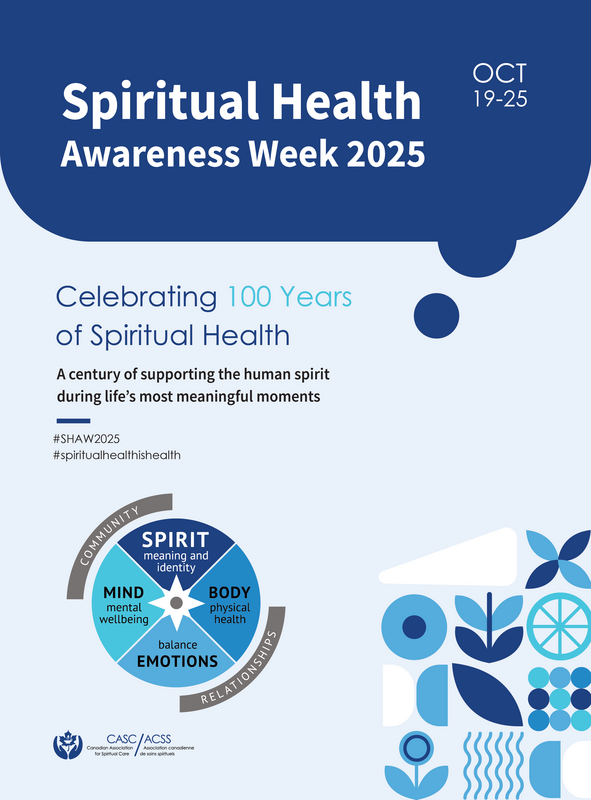
Print and post the SHAW posters in high traffic areas such as your workplace common area, information desk, other departments, coffee shops, and anywhere else they can be seen! - Organize an event with your coworkers, peers and friends
Create community around an important cause and share the message that spiritual health is health! - Powerpoint slide show!
Invite your colleagues, friends and wider network for a lunch and learn. Prepare a powerpoint presentation using the SHAW slides and celebrate spiritual health! - Spiritual Health Awareness Week Booth
Set up a booth at your workplace and invite people into meaningful dialogue about what we do and why its important! - Digital Boards
Request that the posters and or powerpoint slides be added to the digital boards at your workplace. - Share social media content on your platforms
We have prepared some great content for you to share! - T-shirt campaign!
Fashion is a form of expression. Your spiritual care department or psychospiritual therapy team can send a powerful message by wearing SHAW T-shirts throughout the week. - Order and share CASC/ACSS pens
Sharing SWAG can be a great conversation starter and a way for you to talk about spiritual health and why it matters. - Send a letter to your CEO
Customize the letter template from the tool kit and encourage your CEO or other leaders to share, post, and talk about spiritual health. - Engage with local doctors, nurses, professors, researchers, therapists, social workers, and other professionals
Talk with other professionals in your network about spiritual health and why it’s important. Encourage them to spread the message and raise awareness during SHAW! - Make a donation to the Foundation
When you donate to the Foundation, you are ensuring the advancement of spiritual care/psychospiritual therapy education and research, and supporting spiritual health!